

Irrigation efficiency & crop yieldStable, oxygen‑rich irrigation water. Healthier roots. Higher yield.
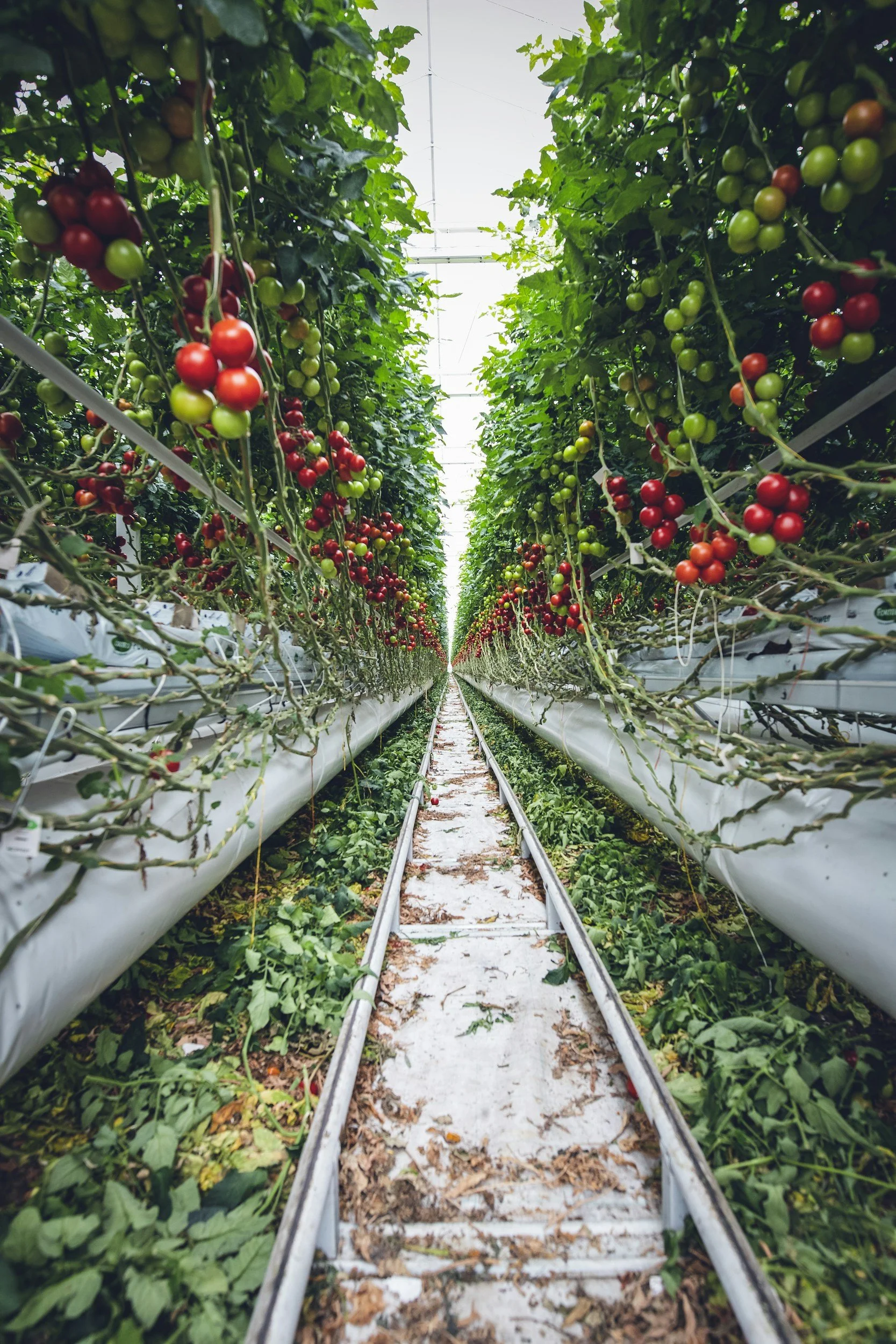
Your irrigation water loses oxygen as it warms in tanks and reservoirs. Low dissolved oxygen creates ideal conditions for root disease and biofilm buildup — reducing yield and increasing input costs. We stabilize DO with nanobubble oxygenation and document the improvement with continuous monitoring.
10–20%
DO response in minutes, not days
Yield improvement potential
Upset detection time
Integrating proven technology from


01 - The ProblemWhat warm, low-oxygen water is costing your yield.
Pain Points
Water sitting in tanks or reservoirs loses oxygen as it warms up.
Low-oxygen water creates ideal conditions for root disease — often controlled with costly chemical treatments.
Biofilm builds up inside irrigation lines over time, restricting flow.
Business Impact
Root disease reduces yield and crop quality.
Ongoing chemical dosing and line cleaning add real, recurring cost.
Growers often over-water and over-fertilize just to compensate — raising costs.
What would change if your irrigation water carried more oxygen to the root zone — without a single chemical treatment?
We measure your real conditions — before we recommend anything.
02 — What we actually doThe right solution for a greenhouse is not the right solution for an open field. So, we start with your actual water, your crop, and your growing system — not a generic specification.
01
Dissolved oxygen, water source, temperature, dosing setup, filtration, and the crop you’re growing. Real conditions on your site — documented, not assumed.
We assess your water & system
02
We show you where oxygen is being lost
Where DO drops, where inputs are being wasted, and what those costs across a season. Clear reasoning, shown step by step.
03
We recommend what’s actually needed
Sometimes the answer is nanobubble oxygenation. Sometimes it’s a change to dosing or filtration. If your water is already doing its job, we tell you that too.
03 — When the answer is new technologyWhat is a nanobubble, and why do roots need it?
A normal bubble rises and disappears in seconds — like the fizz in a glass of soda. Its oxygen is gone almost immediately.
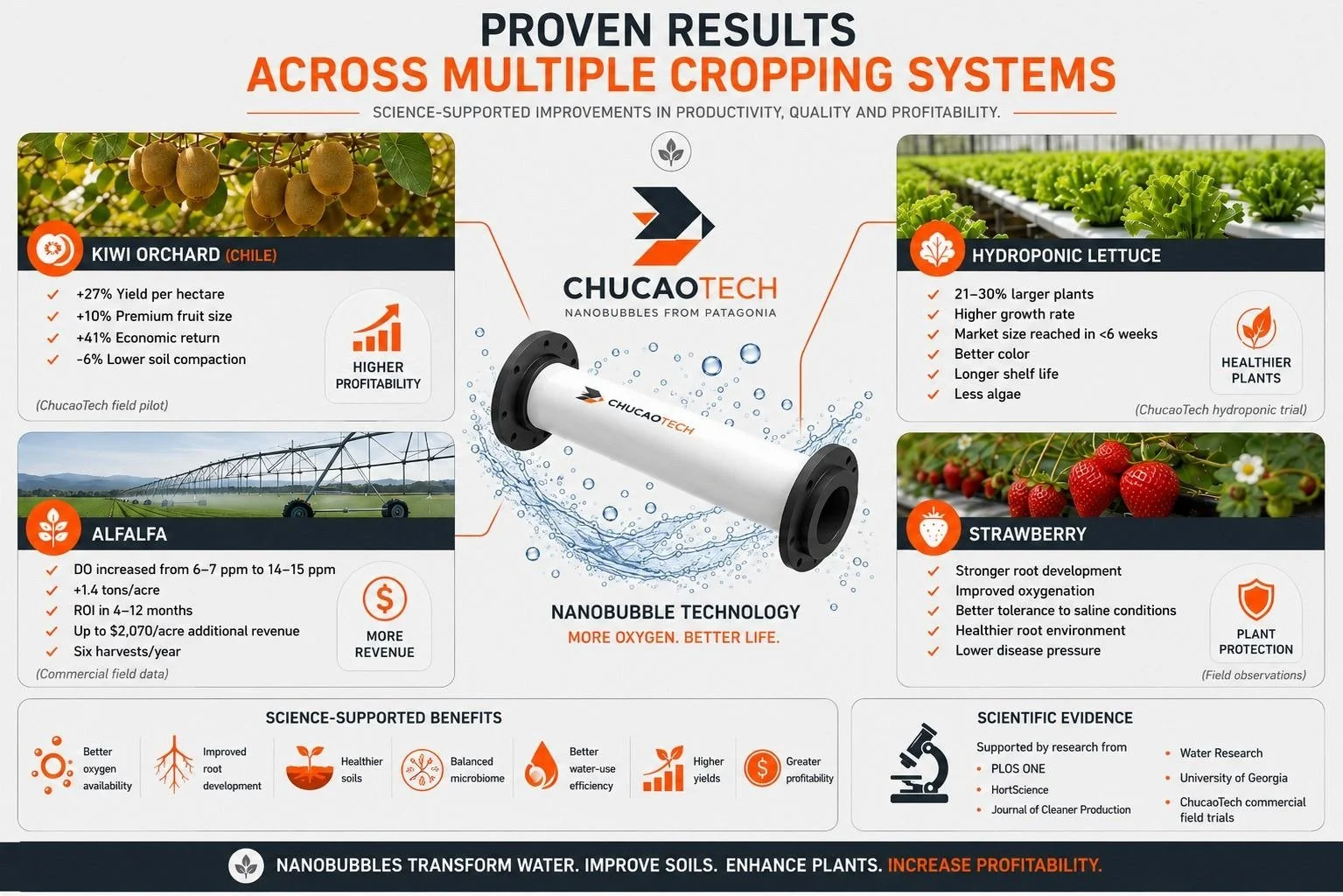
Nanobubbles are over 2,500 times smaller than a grain of salt. Too small for buoyancy to lift them, they stay suspended for weeks, carrying stable oxygen straight to the root zone — and physically scrubbing biofilm out of your lines as they go. No chemicals, and it fits the irrigation system you already have. We build these systems with nanobubble generators from ChucaoTech, sized for your crop and water source.
04 - How the system actually worksThree parts. One integrated system.
Nanobubble hardware and biological sensors are both, on their own, just equipment. The reason to call RASTA-TECH isn't either one alone — it's how we combine and tune them for your specific plant.
The Hardware— Powered by ChucaoTech
Nanobubble oxygenation
Inline generators lift dissolved oxygen to stable, saturating levels — often above 15 mg/L — straight into your irrigation water.
Sensing & data — Powered by SENTRY
Water-quality monitoring
Continuous dissolved-oxygen and water-quality readings confirm the system is delivering, season after season.
RASTA-TECH
The engineering that ties it together
Sizing for your crop and system, integration with your dosing and filtration, commissioning, and seasonal tuning. This is the part no equipment vendor does for you.
What we install to solve it.
We specify, source and commission the right equipment for each stage of your process — matched to your plant, not sold from a catalogue. A selection of what we work with:
Oxygenation
Getting stable, dissolved oxygen into the water
Inline nanobubble generators
Root-zone oxygen enrichment
Chemical-free treatment
Nanobubble via ChucaoTech
Water conditioning
Keeping lines clean and water usable
Biofilm control in irrigation lines
Filtration integration
Dosing-system compatibility
Filtration & equipment via partners
Measurement & control
Confirming the system delivers, all season
Continuous dissolved-oxygen sensors
Water-quality monitoring
Data dashboard & export
Sensing via SENTRY
05 - Straight answersQuestions operators actually ask.
-
Roots respire, and they take oxygen from the water — not the air. As irrigation water warms, dissolved oxygen drops, slowing nutrient uptake and favouring anaerobic pathogens such as Pythium and Phytophthora.
Key points
Warm water → lower DO → reduced nutrient uptake
Low‑oxygen conditions favour root disease
Stabilising DO treats the cause, not the symptom
Reduces reliance on chemical interventions
-
By improving how much of your existing water the plant can actually use.
Key points
DO‑rich water → better nutrient uptake → more yield from the same litres
Removing biofilm restores even flow across lines → fewer dry spots, more uniform growth
Higher efficiency reduces the reflex to over‑water and over‑fertilise (lower OPEX)
-
Nanobubbles are 2,500× smaller than a grain of salt and stay suspended for weeks, not seconds. They deliver stable oxygen to the root zone and physically scrub biofilm — without chemicals .
Key points
Conventional bubbles: gone in seconds → oxygen lost immediately
Nanobubbles: persist for weeks → stable DO delivery
Also remove biofilm from lines → cleaner system, better flow
Fits the irrigation system you already have (inline)
-
There is no universal figure. Results depend on crop, water source, temperature and system design.
Key points
Published trials show gains, but site conditions vary
Honest approach: measure first
Small trials provide real, operation‑specific data
Decisions based on measured ROI, not generic claims
-
In most cases, no. Nanobubble systems are designed to fit inline with existing lines, dosing and filtration.
Key points
Typically no civil works
Installation integrates with current infrastructure
Assessment confirms feasibility and scope
Retrofit approach keeps CapEx low
-
No. Sometimes the correct recommendation is simply adjusting dosing or filtration — no new technology required.
Key points
Independent evaluation
You keep the reasoning and report
Recommendations may be operational, not technological
Transparent engineering, not catalogue selling
-
Both — and also vertical and container growing. System sizing is tailored during the assessment.
Key points
Applicable across greenhouse, open field, vertical, container
Placement and flow rates customised to your layout
Scalable across diverse irrigation systems
-
It depends on your operation. You receive a documented view of water quality and clear recommendations.
Key points
Includes DO, temperature, filtration and water‑source analysis
Identifies where oxygen is lost and its impact
Prioritised recommendations with rationale
Clear proposal based on crop and system layout
ContactLet’s explore the right solution for your system
Whether you need support with nanobubble technology, biogas monitoring or water treatment optimization, our engineers are here to help.
Have any questions? Fill out the form or reach out via email. Response time: within 24 hours.
